


Last week I combed through 630 job listings I’ve posted over the last two and a half years. Plenty of good news in there. Pay is solid, titles are expanding, and companies way outside entertainment are hiring 3D artists.

Then there was the number that jumped off the page. About 4 percent of those listings were junior or entry-level. 4. Meanwhile, thirty-six percent were senior, lead, principal, or director.
A quick reminder: I’m not an economist. I read a lot of job posts, I’ve worked inside studios for a long time, and I’m sharing what my dumb brain thinks is going on. I haven’t done deep research on why junior roles are drying up. This is my own experience talking. But everything I’ve seen points the same way.
Money is tight, so companies aren’t hiring. They’re leaning on the crew they already have to do more with less. The entry-level tasks still need doing, but instead of hiring someone new, studios are handing them to senior artists to stack atop their existing workflows and expecting new tools (especially AI workflows) to close the gap.
Meanwhile, more schools and programs are training 3D artists than ever before. So every year, more people are learning this stuff and chasing fewer openings. This leaves many people unable to gain a foothold in the industry.
Developing talent
This industry has developed artists for decades on cheap junior labor. Young people leave school, get paid just enough to live in whatever city with 24 roommates, take on the tedious work nobody senior wants, and learn the craft along the way. That was the trade. Bad pay and grunt work in exchange for a front-row seat and time to develop.

My first job was a Lighting Technical Assistant at Blue Sky, which is a fancy title for render wrangler. The work I got handed was not glamorous. Debugging renders. Babysitting the farm. Fixing whatever broke at two in the morning. Running the projector for reviews.
All real jobs I had to do and none of them were art. Each one taught me how a studio actually runs and what good looks like up close. The last one of running the projector was just a crash course in visual storytelling because as different artists shuffled in and out, I saw every note the director, the art director, and the departments heads gave on shots. And over time I went from “how the hell did they see that” to “I bet they are going to call that out” and being right.
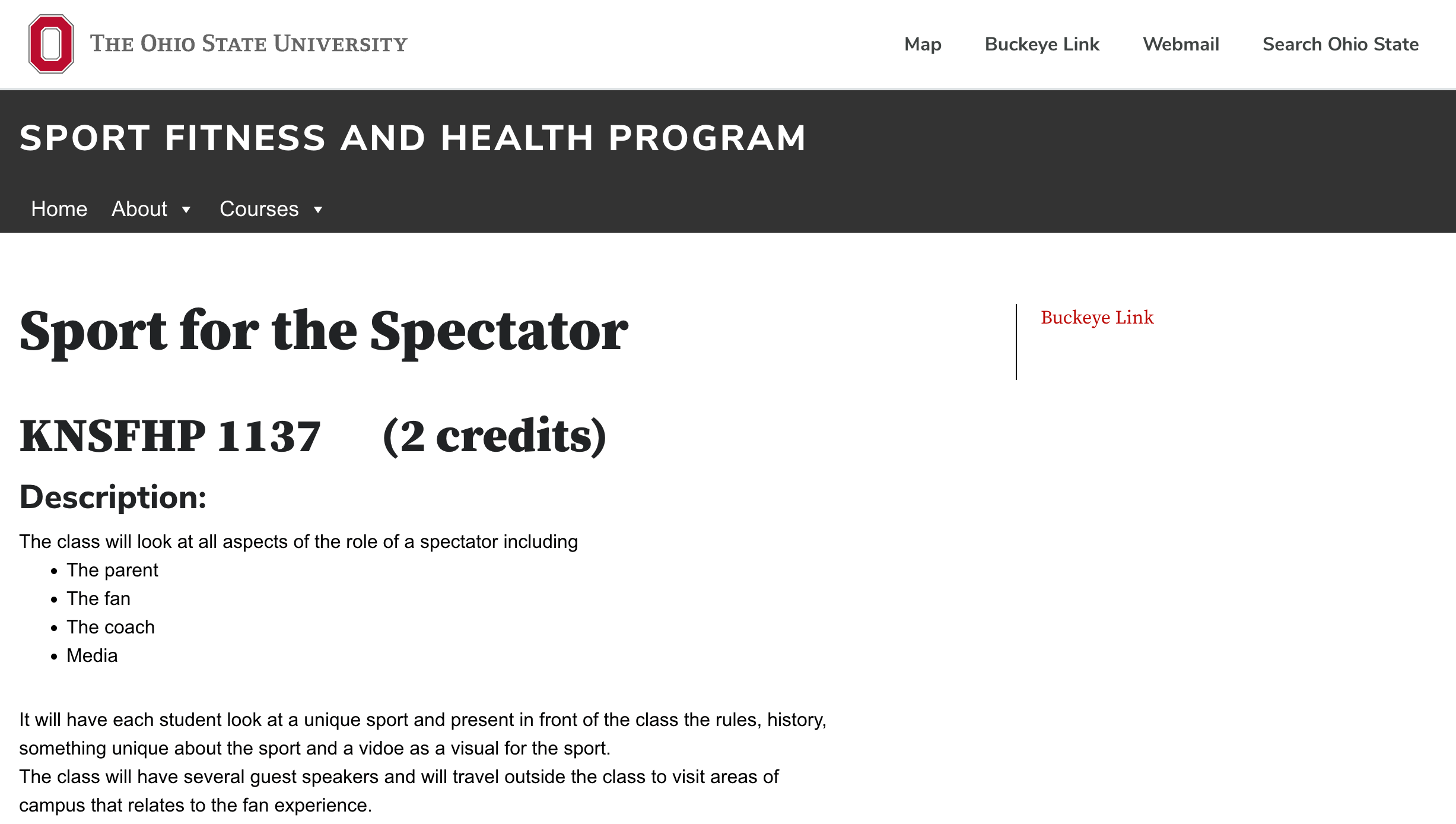
This time is essential because you won’t learn everything you need to succeed in this craft in school. 3D is complex. It requires more than four years of learning the tools alongside your other classes, like Astronomy 101, History of the Soviet Union, Intro to African Geography, and Sport for the Spectator. (Yes…those are all real classes I took in college.)
Now with remote work tools like SyncSketch and Frame.io, feedback can happen asynchronously, and entry-level employees running the projector can’t sit in the room.
Not to mention all the roles that can be automated with other new tools like checking normals across a scene, cleaning up data, rotoscoping, wrangling renders, building variations, etc… A senior artist equiped with the right tooling does it faster and doesn’t need training.

I’m not blaming anyone for this. Not the studios, not the seniors, and definitely not the juniors. The economy is tight. Companies are being asked to do more with less, and if a senior artist with good tools can cover what used to take three juniors, they’ll do it. In the short term it makes complete sense.
Projecting out
Every senior artist you’ve ever worked with was once a junior. They learned on the grunt work. They sat in the back of dailies. A supervisor who knew what they were looking at kicked their shots back twenty times.
If we stop hiring juniors, we stop making seniors. Not this year. Probably not next year either. But eventually the current senior class retires, burns out, or leaves the industry, and there’s nobody behind them who spent the last decade building the eye.
This week I listened to Derek Thompson’s Plain English episode with Ethan Mollick, “AI Is Smarter Than Ever. So Where’s the Revolution?” Thompson framed the whole problem in one line: AI “makes experts more powerful, while often automating the kind of junior work that actually creates expertise.”
Mollick pointed out that “the way we teach expertise is apprenticeship,” and that “we don’t have a way of teaching expertise fully in schools.” His example was an intern at a podcasting studio doing the grunt work. Swap in a render wrangler at an animation studio and nothing about the argument changes.
Then he said the part that stuck with me. When juniors did that work, “the learning was incidental to the process, even if it was the point in the long term.” Nobody at Blue Sky handed me farm babysitting because it was educational. They handed it to me because it needed doing and I was willing to do it for less than $40k a year. The education came along for free.
Take away the work and the free education goes with it. Every industry built on apprenticeship is going to hit some version of this. Ours just feels it sooner because the apprenticeship was so baked into how the work got made.
The scary part is that nobody is making a bad decision. Every individual choice is rational. A studio that hires a junior instead of using a tool is spending more money for slower work. The problem only shows up in aggregate, years later, when it’s too late to fix quickly.
We have to start this conversation now
I don’t have a clean solution. I think we need to start with an honest assumption: fewer senior people will do more of the work with better tools. If that’s true, then developing entry-level people can’t be a side effect of grunt work anymore. It has to be deliberate.
Mollick’s phrase for this is that we have to “decouple efficiency from learning, which is not an easy thing to do in companies.” For a hundred years those two things came bundled. The cheapest way to get the work done was also how the next generation learned to do it. That bundle is breaking.

That might mean studios treating junior roles as an investment in their future senior bench instead of as cheap labor. It might mean the same tools that automate the tedious work get used to teach it, so a junior learns what a flipped normal is and why it matters instead of never seeing one. It might mean mentorship becomes an actual line item instead of a favor seniors do on their lunch break.
None of this happens unless somebody decides it matters. Right now nobody’s job is to decide that.
We spent decades building an industry on the idea that young people would show up cheap and leave skilled. The tools might be taking away the cheap part. If we don’t figure out what replaces it, we lose the skilled part, too.

3D News Roundup
Maxon dropped its entire 2027 lineup, EA shut the doors on BioWare, and Rivian just bought a startup that turns dashcam footage into editable 3D worlds.
Software & Tools
Maxon One Release Brings New Versions of Cinema 4D, ZBrush, Redshift, Red Giant and Autograph - CGPress
Blender 5.3 Release Notes (Beta) - Blender
Plasticity 2026.2 Is Out - CG Channel
Animatica Marionette Offers Directable Character Animation Inside Blender - CGPress
Get Free Maya Character Rigging Toolset mGear 5.4 - CG Channel
New CG Software You May Have Missed: 18 October 2026 - CG Channel
AI + 3D
At View Conference, Executives From Sony, ILM, Skydance, and More Talk AI and Innovation, But Questions About Jobs Loom Large - Cartoon Brew
Rivian Buys Third Dimension AI to Turn Real Roads Into 3D Test Worlds - The Next Web
Scene Light: AI-Powered Relighting in Red Giant - Maxon
NVIDIA VFX Nodes for Video Upscaling, Frame Generation and SDR-to-HDR, for VFX Professionals - ComfyUI
Adobe and NVIDIA Expand Collaboration to Speed Agentic Creation - Adobe
NVIDIA Cosmos Opens New Tools to Train, Evaluate and Deploy World Models - NVIDIA
Industry News
EA Is Shutting Down Legendary RPG Studio BioWare Amid New Round of Layoffs - Game Informer
Animation Employment Stats From France Show Latest Trends - CGPress
Check Out Accenture Song’s VFX Breakdown for Lanterns - CG Channel
Who Am I?
New 3D Artist Merch!
New 3D Artist swag is here!
We ran a design contest inside the community, and Randy Mills took it home with a CMYK sweatshirt design that’s honestly too good not to wear.
Grab yours today.


3D Job Spreadsheet
Link to Google Doc With A TON of Jobs in Animation (not operated by me)
Hello! Michael Tanzillo here. I am the Senior Director of Business Development at KitBash3D (Greyscalegorilla, Artstation, Sketchfab). Previously, I was the Head of 3D Tech Artists at Adobe and a Senior Artist on animated films at Blue Sky Studios/Disney with credits including three Ice Age movies, two Rios, Peanuts, Ferdinand, Spies in Disguise, and Epic.
In addition to my work as an artist, I am the Co-Author of Lighting for Animation: The Visual Art of Storytelling and the Co-Founder of The Academy of Animated Art, an online school that has helped hundreds of artists around the world begin careers in Animation, Visual Effects, and Digital Imaging. I also created The 3D Artist Community and this newsletter.
www.michaeltanzillo.com
Free 3D Tutorials on the Michael Tanzillo YouTube Channel
Thanks for reading The 3D Artist! Subscribe for free to receive new posts and support my work. All views and opinions are my own!
This hit home. I've been in animation for 27+ years, and I came up exactly the way you describe: no animation school, no connections, just a seat close enough to watch how senior people judged the work.
At iAnimate we've trained 6,000+ animators online, and the biggest jump I see never comes from software. It comes when someone with a trained eye looks at their work, week after week, and tells them the truth.
I agree with your conclusion: if the junior seat disappears, mentorship can't stay a lunch-break favor. It has to be intentional. Thanks for starting the conversation.
Ultimately, we have to lean more heavily into the “each one, teach one” mentality. Lending services, mentorship, community of practices, etc., to ensure that the skills, temperament, and the “eye” for detail are passed down from generation to generation. I'm currently a part of a lighting community of practice called CG Foundry created by Karim Yasser solely focused on developing the skills necessary to be a professional cg lighter in the industry.
I've had the pleasure to be among other professionals, enthusiasts, and up-and-coming professionals sharing the same love for lighting and learning to navigate the intricacies of it all. Just in the few months of me being a member, my skills, portfolio, and outlook are far more sharper than where I was when I was trying to figure it out on my own or on the job.
There isn't much we can do with the current industry with layoffs, smaller budgets, and AI tools and how that affects the current and future graduation class of artists, but providing a launch pad for them to try to survive and have a fighting chance I think is paramount to keeping the craft intact.